

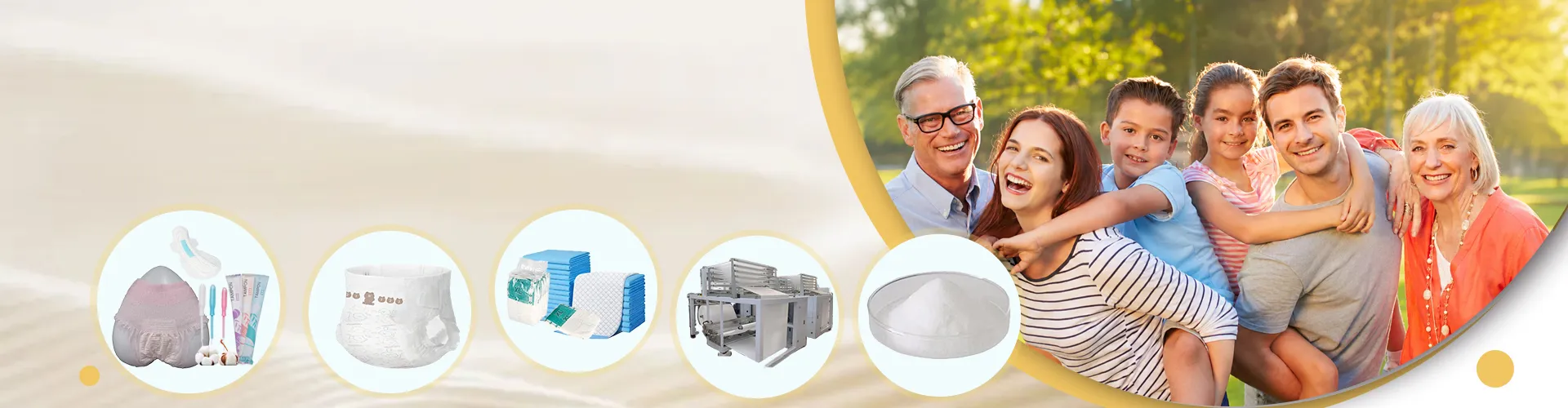
H1: Feasible and Economical Eco-Protection Solutions for Hygiene Products
The global hygiene industry is under increasing pressure to reduce plastic waste without sacrificing product performance or affordability.
Baby diapers, adult incontinence products, sanitary products, and other disposable hygiene products depend heavily on polymer-based materials. In particular, PE film is widely used as a waterproof backsheet because it provides reliable leakage protection, flexibility, and manufacturing compatibility.
However, conventional PE creates a difficult sustainability challenge.
For hygiene brands, simply replacing traditional PE with a more expensive alternative may not be commercially viable. The industry therefore needs solutions that balance environmental objectives, technical performance, production compatibility, and cost.
One emerging approach is ABT anaerobic biodegradable PE, which is designed to introduce biodegradation functionality while retaining the practical advantages of conventional PE-based materials.
For international hygiene brands and OEM buyers, the key question is not simply whether a material is biodegradable. The more important question is whether it can deliver a realistic combination of performance, environmental positioning, production compatibility, and cost efficiency.
H2: Why Sustainable Materials Matter in Hygiene Products
Disposable hygiene products provide important health and care benefits, but their multilayer construction also creates challenges at the end of their useful life.
A typical diaper can contain:
Nonwoven fabric
Fluff pulp
Super Absorbent Polymer (SAP)
PE backsheet
Elastic components
Adhesives
Packaging materials
The backsheet is particularly important because it must prevent liquid leakage while maintaining flexibility and, in breathable products, supporting moisture vapor transmission.
This creates a difficult material-selection equation:
Leakage protection + softness + breathability + processability + sustainability + cost
An effective sustainable material therefore needs to be evaluated as part of the complete hygiene product rather than as an isolated raw material.
H2: What Is Anaerobic Biodegradable PE?
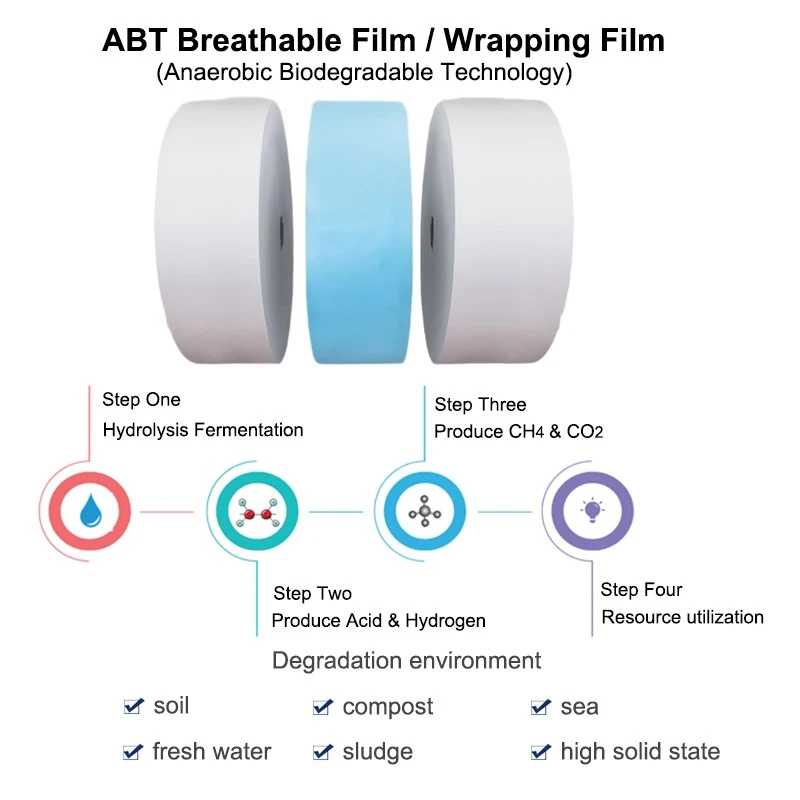
Anaerobic biodegradable PE refers to PE-based materials designed to undergo biodegradation under oxygen-limited or anaerobic conditions through the interaction of the polymer and microbial environment.
According to the technical material supplied for this topic, anaerobic biodegradation involves several biological stages:
Hydrolysis
Acidification
Acetogenesis
Methanogenesis
Under suitable conditions, the resulting biological processes can generate products such as carbon dioxide, methane, and organic matter.
The important distinction is that anaerobic biodegradation should not automatically be treated as equivalent to conventional industrial compostability.
Different degradation technologies work under different environmental conditions.
H2: How ABT Technology Can Support Hygiene Product Applications
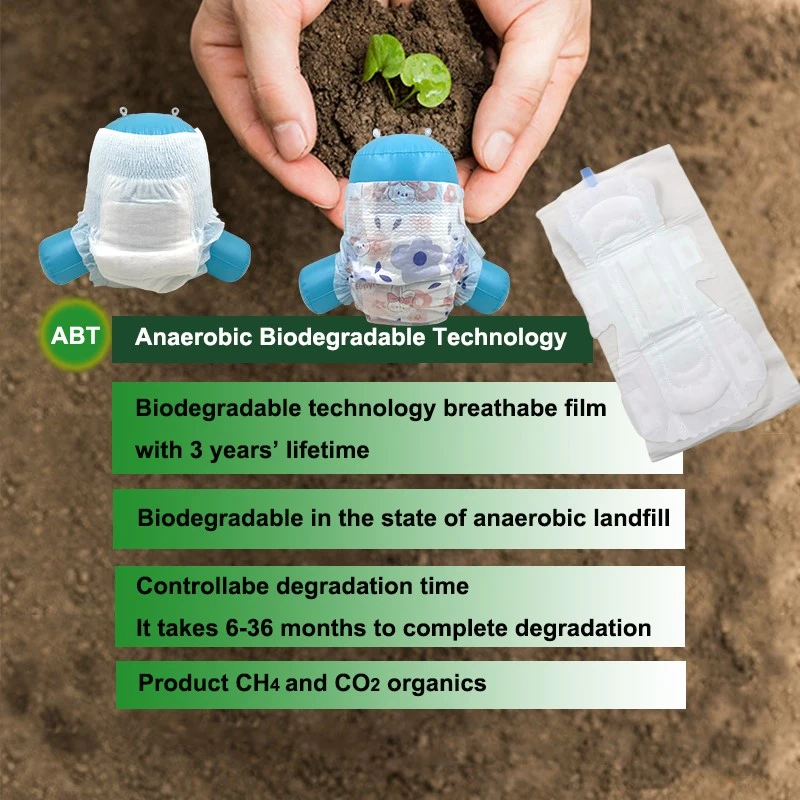
For hygiene products, one of the biggest advantages of an anaerobic biodegradable PE approach is the possibility of integrating biodegradation functionality into an existing PE-based material system.
The supplied technical material describes an anaerobic additive approach in which an organic anaerobic additive is incorporated into a polymer matrix. Under suitable oxygen-limited conditions, microorganisms can colonize the material surface and participate in polymer degradation.
This concept can potentially reduce the need to completely redesign the product around a different polymer system.
For manufacturers, that matters because changing a backsheet material can affect:
Film strength
Heat sealing
Elastic bonding
Printing
Lamination
Machine speed
Leakage performance
Overall product cost
A more compatible approach can therefore reduce development complexity.
H2: Anaerobic Biodegradable PE vs Conventional PE
When evaluating sustainable hygiene materials, buyers should avoid looking at biodegradability alone.
A professional procurement evaluation should compare multiple dimensions.
| Evaluation Factor | Conventional PE | Anaerobic Biodegradable PE |
|---|---|---|
| Waterproof function | Excellent | Application dependent |
| Flexibility | Excellent | Requires validation |
| Existing PE processing compatibility | High | Requires formulation validation |
| Sustainability positioning | Limited | Potentially stronger |
| Anaerobic degradation potential | Very low | Designed for anaerobic conditions |
| Material cost | Competitive | Dependent on formulation and scale |
| Certification requirements | Standard material compliance | Additional degradation verification required |
The exact performance depends on the film formulation, additive technology, GSM, processing conditions, and end-of-life environment.
Therefore, laboratory testing and application validation should always precede commercial adoption.
H2: Why Anaerobic Biodegradation Is Different
A major source of confusion in the sustainable materials market is the assumption that all biodegradable plastics behave in the same way.
They do not.
H3: Industrial Composting Is Not the Same as Anaerobic Degradation
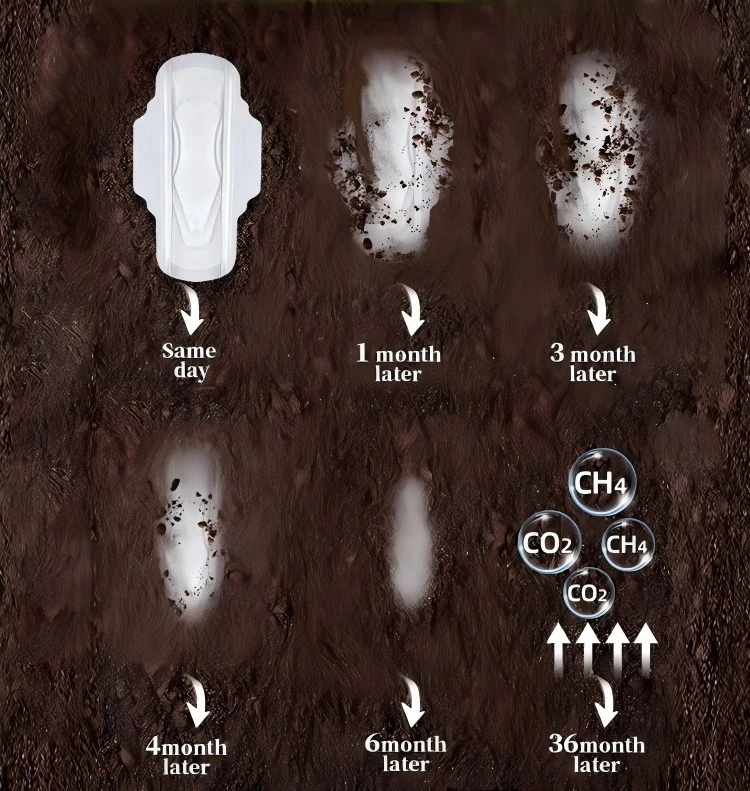
Some biodegradable polymers are optimized for industrial composting environments, which typically involve controlled temperature, moisture, and oxygen conditions.
Anaerobic biodegradation follows a different biological pathway.
The supplied technical material notes that some common biodegradable materials may degrade much more slowly in marine environments than under controlled industrial composting conditions.
Therefore, hygiene brands should always ask:
Under what environmental conditions does degradation occur?
What is the required temperature?
Is oxygen required?
What microorganisms are involved?
What is the expected degradation period?
What test method supports the claim?
This prevents vague or misleading sustainability claims.
H2: Technical Parameters for Biodegradable PE Backsheets
For diaper and adult care manufacturers, sustainable material selection still starts with technical performance.
Important parameters include:
H3: GSM and Film Thickness
Film weight directly affects:
Material consumption
Product weight
Cost
Flexibility
Mechanical strength
A lower GSM can reduce material consumption, but excessive reduction may compromise:
Tensile strength
Puncture resistance
Leakage protection
Production stability
The correct target should therefore be established through product-level testing.
H3: Mechanical Strength
A diaper backsheet must withstand:
Folding
Stretching
Packaging compression
Transportation
Consumer handling
For pull-up adult diapers, additional mechanical requirements may result from repeated stretching around the waist and leg areas.
H3: Breathability
For breathable diaper designs, the PE film must balance liquid resistance with water vapor transmission.
The complete system may include:
Hydrophilic topsheet → Acquisition layer → SAP/fluff core → Breathable PE backsheet
Changing the backsheet without evaluating the rest of the absorbent structure can negatively affect product performance.
H2: Cost Performance: Why Economical Sustainability Matters
Sustainability only becomes commercially valuable when it can work at scale.
The supplied technical material describes an anaerobic biodegradable masterbatch approach with an addition ratio of approximately 1%–3%, with reported overall cost increases controlled within roughly 5%–10%, compared with higher premiums associated with some fully biodegradable materials. These figures should be validated against the actual formulation, supplier quotation, and production conditions before commercial claims are made.
For B2B buyers, this highlights an important principle:
The most commercially useful sustainable material is not necessarily the most expensive or most biodegradable material. It is the material that achieves the required environmental objective while maintaining acceptable performance and cost.
H2: One-Stop Supply Chain Can Reduce Development Risk
Switching to sustainable hygiene materials requires coordination across multiple components.
A professional hygiene manufacturer can evaluate the interaction between:
PE film
Nonwoven
SAP
Fluff pulp
Hot melt adhesive
Elastic components
Packaging film
This integrated approach can reduce the risk of developing a material that performs well independently but fails inside the finished product.
For example, changing the backsheet may require adjustments to:
Adhesive application
Lamination temperature
Machine tension
Core configuration
Packaging compression
Direct cooperation between the material supplier and hygiene manufacturer can shorten the validation cycle.
H2: Quality Testing Before Commercial Production
Before adopting anaerobic biodegradable PE in a hygiene product, professional buyers should establish a complete validation protocol.
Material-Level Testing
Tensile strength
Elongation
Thickness
GSM
Puncture resistance
Water resistance
Breathability
Thermal stability
Finished Product Testing
Total absorbency
Rewet
Leakage resistance
Core integrity
Back sheet strength
Wearing comfort
Packaging stability
Environmental Performance
Environmental claims should be supported by appropriate standardized testing.
The supplied technical document references ASTM D5511 and ISO 15985 as standards associated with anaerobic biodegradation testing under simulated landfill conditions.
Importantly, these standards should not be interpreted as automatically proving degradation in every natural environment. Buyers should match the test method to the specific environmental claim being made.
H2: Case Study: Developing a More Sustainable Baby Diaper
Consider a private-label hygiene brand preparing to launch a new eco-positioned baby diaper.
Initial Requirements
The buyer wanted:
Strong leakage protection
Breathable backsheet
Premium softness
Competitive retail pricing
Improved sustainability positioning
The challenge was to introduce a sustainable material without completely redesigning the existing diaper production process.
H3: Integrated Development Approach
The manufacturer evaluated:
PE film structure
Film GSM
Breathability
Core absorbency
Adhesive compatibility
Packaging requirements
The sustainable PE option was then tested as part of the complete diaper rather than evaluated only as a standalone film.
This approach helps ensure that environmental improvements do not compromise the fundamental function of the product.
H2: Future Prospects for Sustainable Hygiene Materials
The sustainability roadmap for hygiene products is becoming increasingly diversified.
Future development may include:
Bio-based polymers
Biodegradable SAP
Bamboo fiber nonwoven
Reduced-GSM PE films
Recyclable packaging
Alternative absorbent cores
Anaerobic biodegradable polymer technologies
The supplied technical material also identifies the need for improved standards, scenario-specific degradation rates, environmental safety evaluation, and cost optimization as important areas for further development.
For global brands, this means sustainability should be treated as a long-term product development strategy rather than a single material replacement project.
H2: Why Choose Premium Hygiene Products?
Premium Hygiene Products combines hygiene product manufacturing with integrated raw material sourcing and OEM/ODM development.
Our capabilities include:
Baby diaper manufacturing
Adult diaper manufacturing
Sanitary napkin production
PE film sourcing
Nonwoven materials
SAP and absorbent core solutions
Sustainable material development
OEM and private label production
Global export support
Our technical team can evaluate sustainable materials according to the finished product's performance requirements, target market, cost structure, and production process.
H2: Final Thoughts
The transition toward sustainable hygiene products does not have to mean sacrificing performance or accepting unlimited cost increases.
ABT anaerobic biodegradable PE represents one potential pathway for brands seeking to introduce biodegradation functionality into PE-based hygiene materials.
However, responsible procurement requires more than an environmental claim.
Buyers should evaluate:
Material performance
Degradation conditions
Testing methodology
Regulatory requirements
Production compatibility
Total cost
End-of-life scenario
The most practical sustainable hygiene solution is one that balances environmental responsibility, product safety, manufacturing reliability, and commercial feasibility.
As the global hygiene industry continues to reduce its dependence on conventional plastics, material innovation will become an increasingly important competitive factor for international brands.
H2: Develop Your Sustainable Hygiene Product
Looking for anaerobic biodegradable PE, sustainable diaper materials, or an eco-friendly hygiene product OEM partner?
Premium Hygiene Products can support your project with:
Sustainable material sourcing
Biodegradable PE backsheet solutions
Baby diaper OEM/ODM
Adult care product development
Material compatibility testing
Customized product structures
Private label packaging
Global B2B supply support
Contact Premium Hygiene Products to discuss your target market, product specifications, sustainability requirements, and request a customized quotation.