

Non Woven
What is Non Woven
Non woven or non-woven fabric is a fabric-like material made from staple fibre and long fibres, bonded together by chemical, mechanical, heat or solvent treatment. The term is used in the textile manufacturing industry to denote fabrics, such as felt, which are neither woven nor knitted.
Soft quality of the fabric
Non woven is known for its high softness. As it is made up of fine fibers, the finished product that is created is soft and comfortable. This feature makes it a widely-used fabric in the fashion domain. Some of the specific types of nonwoven fabrics, such as spunlace fabric, are so gentle to the skin that they have high utility in skin care products like facial masks and wet wipes. The materials that are used in the preparation of non woven are instrumental in ensuring their softness.
Breathable quality
One of the main highlights of non woven is the high breathability. The porous nature of the fiber enhances the circulation of air. This makes it easy to wash and dry the fabric in no time. The fabrics that are made of Polyethylene film (PE), as well as Polypropylene, spun bonds are known to allow air to pass, which enhances the comfort level. The high breathability of the fabric enhances its applicability as it can be commonly used for making gloves, aprons, and caps. Furthermore, the water-repellant nature of the fiber can be kept dry and free from unnecessary moisture content.
Acts as a vital bacterial barrier
The presence of bacteria is regarded to be one of the major issues while using fabrics. However, while using non woven, there is no risk of the presence of bacterial agents. Polypropylene, which is used for making the fabric, is known to be a chemically passive material. This feature eliminates the possibility of attack by bacteria or insects. As the fabric is immune to such harmful elements, its strength is not compromised in any way. The non-moldy and water-removing attributes of the fiber enhance its safety and make it a useful material that is used in hospitals.
Robust physical properties
One of the key highlights of any fiber relates to its innate properties. The property of a non woven is what makes it versatile and unique in its own rights. As the fabric is made by entangling filaments or fiber, it is much stronger as compared to other standard staple fibers. The strength of the fiber is non-directional in nature, implying that the strength is similar in both horizontal and vertical directions.
Sustainability dimension
A vital advantage of using non woven is related to the sustainable and eco-friendly nature of the material. For most non woven, the raw material that is utilized is Polypropylene. As the chemical structure of the substance is not very stable, it can easily be decomposed and degenerated. So even if the fabric is used in abundance, it can enter the next stage of the environmental cycle without giving rise to any toxic implications. A shopping bag that is made using non woven can be entirely composed within three months without adversely affecting the environment.
-
![Non Woven Polyester Fabric]() Non Woven Polyester FabricHot air through nonwoven has the characteristics of high fluffy, good elasticity, soft hand feeling, strong warmth retention, good air permeability and water permeability.read more
Non Woven Polyester FabricHot air through nonwoven has the characteristics of high fluffy, good elasticity, soft hand feeling, strong warmth retention, good air permeability and water permeability.read more -
![Spunbond Non Woven Fabric]() Spunbond Non Woven FabricHydrophilic non woven fabric material mainly used in top sheet, cladding layer, ADL of baby diapers. And used in top sheet of sanitary napkin, sanitary pad, panty liner.read more
Spunbond Non Woven FabricHydrophilic non woven fabric material mainly used in top sheet, cladding layer, ADL of baby diapers. And used in top sheet of sanitary napkin, sanitary pad, panty liner.read more -
![Non Woven Fabric Material]()


Why Choose us
Quality Assurance
We always feel that all success of our company is directly related to the quality of the products we offer.
Advanced Manufacturing Capabilities
We control the product quality critically for every step during the manufacturing from custom raw materials to production. We offer technical support that is second to none.
Complete qualifications
We always feel that all success of our company is directly related to the quality of the products we offer. They meet the highest quality requirements as stipulated in ISO9001, ISO14000:14001 SGS guidelines and our stringent quality control system.
Our Team
Being in disposable sanitary products industry for over 10 years, our team has served for world top companies and brands on OEM diapers, napkins, incontinent pads and etc.
The Raw Materials Used In Non Woven

Animal fibers Sheep's wool
There are many types of animal wool and hairs that are used in the textile industries to produce things. But high importance is given to sheep's wool to produce material non woven. In general, sheep's wool is at a high price, so it is collectively used in the form of cuttings or reclaimed wool. However, there is provenance imposing restrictions on the use of sheep's wool based on their variations in the impurities and the quality of reclaimed wood, as well as the physical and chemical properties.
Vegetable fibers
Cellulose is one of the most important vegetable fiber constituents, which is hygroscopic and hydrophilic. Apart from this, there are several other substances involved in vegetable fibers that can affect their properties. Another important vegetable fiber is cotton, which is often used for the production of material non woven.
Man-made synthetic polymers fibers
It has been identified that the field of non woven bonded fabrics is very broad that includes different types of existing fibers to some extent. In certain areas of non woven bonded fabrics, specific fiber types are becoming predominant. For instance, the major fiber types are polyamide 6.6 (Nylon) and polyamide 6 (Perlon).
What Are The Types Of Non Woven?
Spunlace non wovens: This non woven material has great use for medical non woven, non woven filter fabric, facial mask fabric, wet wipe fabric, and others.
Pulp air-laid non wovens: This type of non wovens is also known as dry paper or dustless paper non wovens. At first, it tries to open the wood pulp fiber board with the use of air-laid technology into a single fiber state. After that, it makes the fiber agglomerate on the net curtain with the use of the airflow method to consolidate the fiber web into the material cloth.
Heat-bonded non woven: The heat-bonded non woven uses different processes for manufacturing that includes the addition of sticky or fibrous reinforcement material into the fiber network. After that, reinforce the fiber network into cloth material through a cooling or heating process.
Spunbond non wovens: The process of spunbond non wovens includes stretching and extruding the polymer to create a continuous filament and laying the filament into the web. After that, the web gets processed into the non woven via their thermal bonding, own bonding, mechanical reinforcement methods, or chemical bonding.
Wet-laid non woven: The wet non woven process includes the fibrous raw material opening in the aqueous medium into single fibers and mixing different fiber raw materials to create a fibrous suspension slurry. After that, the suspended slurry is transported to a mesh-forming mechanism. Next, the laying fibers are in a wet state to create a cloth material.
Stitched non woven : This is a kind of dry non woven. The process used in the manufacturing involves a warp knitted loop structure to reinforce non-woven materials, yarn layer, the fiber web etc., to create a non woven.
Acupuncture non wovens: It is a kind of dry non woven where needle puncture is used to reinforce the fluffy fiber into the cloth.
If you want the raw materials of non woven for you, then you can contact your nearby service provider and collect them as per your requirements.
Disposable non woven are essentially made for one time use; but some, such as dust cloths, may be laundered and reused a few times.
General applications include personal hygiene products, such as diapers and sanitary napkins; medical products such as surgical gowns and drapes; surgical and industrial masks, bandages, wipes and towels; bibs and even costumes for special events.
Durable non woven have wide applications. Consumer durables include both household goods and home furnishings, such as for draperies, furniture upholstery, mattress padding, towels, table cloths, blankets and carpet backing and clothing and apparel, such as for caps, linings, interlinings, interfacings and the reinforcement of other fabrics.
Many industrial uses include filters, insulation, packing materials, roadbed stabilization sheeting or road-building materials geo-textiles and roofing products.
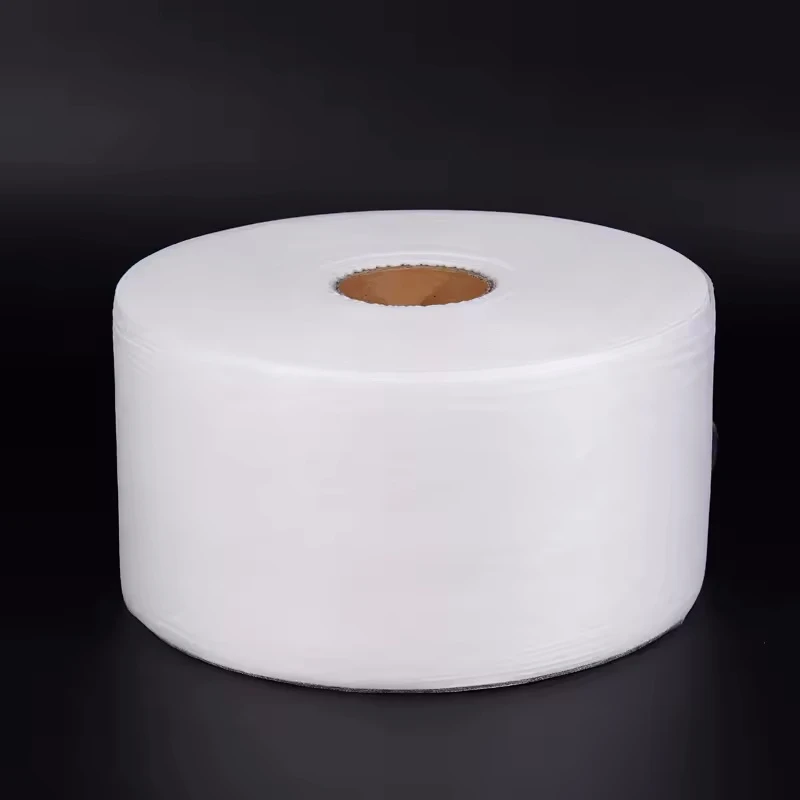
The appearance of non woven may be paper like, felt like, or similar to that of woven fabrics.
They may have a soft, resilient hand, or they may be hard, stiff, or broadly with little pliability.
They may be as thin as thin as tissue paper or many times thicker.
They also may be translucent or opaque.
Their porosity may range from low tear and burst strength to very high tensile strength.
They may be fabricated by gluing, heat bonding, or sewing.
The drapability of this type of fabrics varies from good to none at all.
Some fabrics have excellent launderability; others have none. Some may be dry-cleaned.
Factors to Consider When Choosing Non Woven
GSM, or grams per square meter, is a crucial factor that determines the weight and thickness of the non woven fabric roll. Higher GSM indicates a heavier and more durable fabric, while lower GSM signifies a lighter and more delicate material. The appropriate GSM depends on the intended application.
Non woven can be made from various materials, including polypropylene, polyester, nylon, and natural fibers like cotton and bamboo. The material composition significantly influences the fabric’s properties, such as strength, softness, and breathability.
Non woven come in a range of surface textures, from smooth and silky to rough and textured. The surface texture affects the fabric’s appearance and functionality. For instance, a smooth surface is ideal for printing or lamination, while a textured surface provides better grip and cushioning.
Non woven are available in a vast array of colors and patterns, allowing you to match your project’s specific aesthetic requirements. Solid colors, vibrant prints, and intricate designs are all available to suit your creative vision.
The intended application plays a pivotal role in determining the type of non woven fabric roll you need. Common applications include:
Garment Manufacturing: Non woven fabrics are used in disposable clothing, medical gowns, and protective suits.
Bag Making: Non woven are widely used in the production of shopping bags, tote bags, and promotional bags.
Medical and Hygiene: Non woven fabrics find application in surgical gowns, drapes, and disposable wipes.
Industrial Applications: Non woven fabrics are employed in filtration, insulation, and packaging materials.
Home Furnishings: Non woven fabrics are utilized in curtains, upholstery, and bedding products.
Sanitary Napkin Common Sense: Spunlaced Non Woven and Cotton Spunlaced Non Woven
What is spunlace non woven?
Spunlace non woven is a kind of non woven with certain strength and other properties. This kind of fabric is very different from common needle-punched non woven. It is infinitely close to textiles in terms of feel and performance. Therefore, it is also widely used on the market now.
100% cotton spunlace non woven
Pure cotton refers to the use of 100% natural cotton fiber as raw material. It is also one of the materials used in spunlace non woven. In addition to pure cotton, spunlace nonwoven fabrics will also use polyester, viscose and other materials.
Cotton spunlace non woven is a nonwoven fabric made of 100% natural cotton fiber reinforced by spunlace. Winner Medical Co., Ltd took the lead in researching and developing the patented technology of pure cotton spunlace nonwoven fabrics, directly using natural raw cotton to produce pure cotton spunlace nonwoven fabrics. Compared with chemical fiber spunlace non woven, cotton spunlace nonwoven fabrics have the advantage of being non-allergenic, at the same time easier to degrade, safe and environmentally friendly, and not easy to pollute the environment.
Sanitary napkin material: cotton spunlace non woven
Spunlace cloth made of cotton material can be used on the surface of sanitary napkins. It has good abrasion resistance, is soft and skin-friendly, and has good water absorption properties. Cotton spunlace non woven: After opening and loosening cotton, through using cutting-edge carding machine, netting machine and drafting machine to arrange the pure cotton into a net, through using the high-density needle-like water column formed after pressure, the natural fiber pure cotton is entangled into cloth by the spunlace machine.
Non-woven fibers in hygiene products market
The non-woven fibers in hygiene products market is a growing industry that is expected to continue expanding in the coming years. Non-woven fibers are a type of material that is made from synthetic or natural fibers and are not woven together like traditional fabrics. Instead, they are bonded together through mechanical, thermal, or chemical processes.
Our Factory
Feiyue is located in the China Maritime Silk Road city-Quanzhou. As a global supplier in hygiene products, hygienic materials, Feiyue is to create added value for customers around the world.
Feiyue has focused on top quality hygiene products and hygienic materials for over 15 years in China. We started as a small operation, but now have become one of the leading suppliers in the hygiene products industry in China.
Today, Feiyue has been one of the top suppliers of quality hygiene products and hygienic materials, such as: baby diaper, adult diaper, sanitary napkin, Non woven fabric and PE film and SAP and so on.


Our Certificate
We always feel that all success of our company is directly related to the quality of the products we offer. They meet the highest quality requirements as stipulated in ISO9001, ISO14000:14001 SGS guidelines and our stringent quality control system.

Asked Questions
As one of the most professional non woven suppliers in China, we're featured by cheap products and good service. Please rest assured to wholesale high quality non woven made in China here from our factory.
Non Woven Polyester Fabric, Spunbond Non Woven Fabric, Non Woven Fabric Material